
„Vernetzt euch mit euren Professoren und seid neugierig“ – Wie Krasen über die TH Wildau nach Montenegro kam
Studierende und Lehrkräfte aus insgesamt fünf Ländern kamen Anfang September unter dem Motto „Hochschuldialog mit dem westlichen Balkan“ in Montenegro zusammen. Recycling und Erneuerbare Energien standen im Fokus des Austauschs. Mit dabei: TH-Student Krasen Zhelyazkov. Im Interview erzählt er, welche Erkenntnisse ihn fachlich überrascht haben und warum er anderen Studierenden einen solchen Austausch unbedingt empfiehlt. +++ English version below: “Connect with your professors and stay curious” – How Krasen travelled to Montenegro via TH Wildau +++
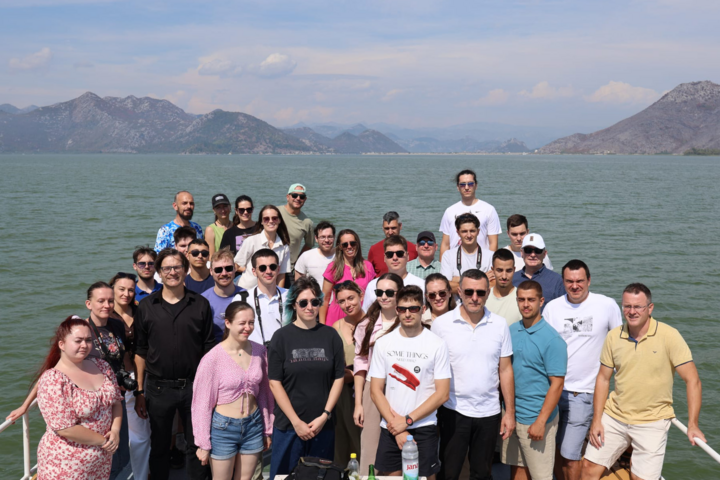
Vom 7. bis 12. September 2026 kamen Studierende und Lehrende der Technischen Hochschule Wildau und vier Partnerhochschulen aus Montenegro, Bulgarien, Serbien und Nordmazedonien in Podgorica zusammen. Im Rahmen des Projekts CIRC4WB (Circular Innovation and Regional Collaboration for the Western Balkans) beschäftigten sie sich mit Kreislaufwirtschaft, Kunststoffrecycling und erneuerbaren Energiesystemen. Beteiligt waren die University of Montenegro, die University of Chemical Technology and Metallurgy in Sofia, die University of Niš und die Ss. Cyril and Methodius University in Skopje. Gefördert wurde der Austausch vom Deutschen Akademischen Austauschdienst (DAAD) im Programm „Hochschuldialog mit den Ländern des westlichen Balkans“. Der Austausch wurde seitens der TH Wildau von Prof. Dr. Michael Herzog initiiert und koordiniert. Die organisatorische Vorbereitung und Betreuung der Reise übernahm Dr. Kiril Dimitrov. Für die fachlichen Impulse und die wissenschaftliche Begleitung waren Prof. Dr. Michael Herzog und Prof. Dr. Christian Dreyer verantwortlich. Sie unterstützten den fachlichen Austausch zu den behandelten Themen durch fachliche Impulsvorträge und regten damit den wissenschaftlichen Dialog zwischen den Teilnehmenden an. Prof. Dr. Eckart Wolf gestaltete die Icebreaking-Aktivitäten, die das gegenseitige Kennenlernen, den interkulturellen Austausch und die Zusammenarbeit der internationalen Teilnehmenden förderten.
Krasen, Du studierst Physikalische Technologien und Energiesysteme im 3. Semester an der TH Wildau und konntest Anfang September an einem vom DAAD geförderten Austausch in Podgorica in Montenegro teilnehmen. In welcher Konstellation seid ihr in den Balkan gereist? War es Glück, dort dabei zu sein?
Glück hat auf jeden Fall eine Rolle gespielt, aber der größte Faktor für meine Teilnahme war der Kontakt an unserer Hochschule: Ein fachübergreifender Dozent hat mich nach einer Vorlesung über Kunststoffe im ersten Semester angesprochen, weil ihm mein Interesse aufgefallen war, und mir diese wunderbare Möglichkeit angeboten. Deswegen auch mein Tipp an Studierende wie mich: Redet wirklich mit euren Professoren und Dozenten! Man weiß oft gar nicht, wie hilfreich solche Kontakte für die eigene Persönlichkeitsentwicklung und das Studium sind, bis man sie hat und schätzen lernt.
Bei dem Austausch in Montenegro ging es um das Thema Kreislaufwirtschaft, sprich Recycling und erneuerbare Energien. Dabei konnte ich zusammen mit den anderen Studierenden aus Deutschland ins Gespräch mit Teilnehmenden aus vier verschiedenen Ländern des Balkans kommen: Montenegro, Serbien, Nordmazedonien und Bulgarien.
Was ist dir von der Woche in Podgorica besonders in Erinnerung geblieben?
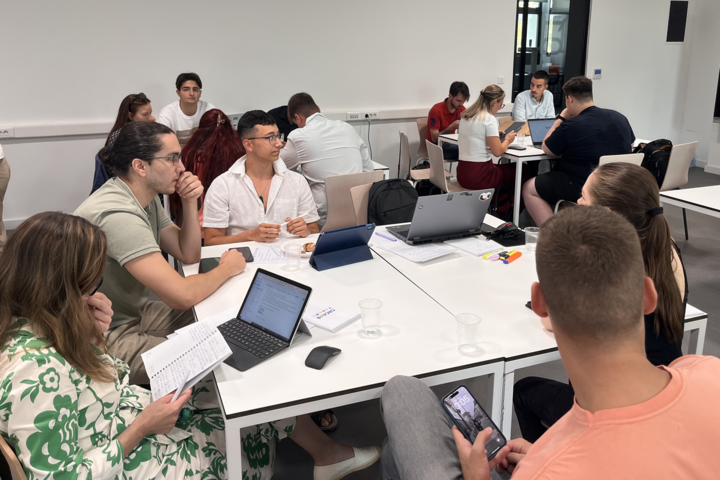
Ganz besonders war: Während des Workshops wurden wir in vier Gruppen aufgeteilt (je fünf Teammitglieder), in denen jeder von uns aus einem anderen Land kam. Das war für mich das erste Mal, dass ich an einer so internationalen Veranstaltung teilgenommen habe, aber am Ende des Tages sind wir alle Menschen und haben uns in den Gruppen super verstanden. Natürlich hat uns die englische Sprache miteinander verbunden. Es gab manchmal Missverständnisse innerhalb und außerhalb der Gruppe, aber das war auch Teil des Erlebnisses und des Spaßes am Ganzen.
Woran habt ihr in den internationalen Teams konkret gearbeitet?
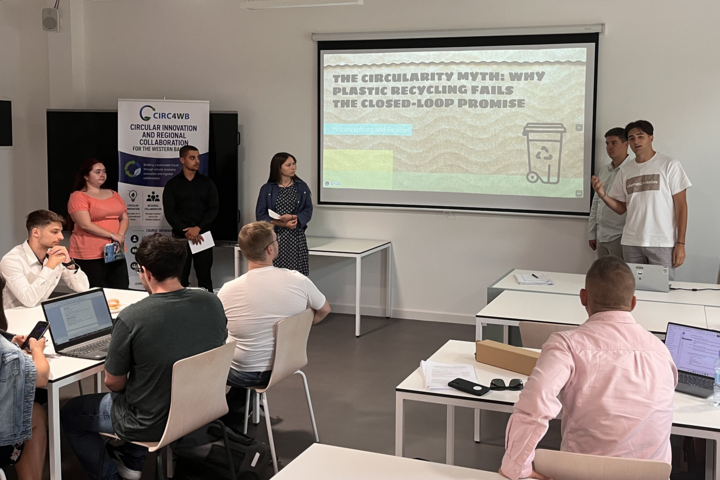
Wir hatten zwei zentrale Themen hatten: Recycling und erneuerbare Energiesysteme. Ich persönlich hatte mehr Interesse an den erneuerbaren Energien, da es gut zu meinem Studiengang passt. Wir hatten seit Anfang des Sommers Zeit, uns auf eines der Themen vorzubereiten. Zu den Arbeitsmaterialien gehörten wissenschaftlichen Paper wie zum Beispiel „McKinsey: The energy transition“ oder „New Pathways for the energy transition („Plan B“)“. Innerhalb der internationalen Teams hatten wir Zeit, uns mit der These „New approaches are needed for a resilient energy supply“ zu beschäftigen und am Ende des Workshops unsere Ergebnisse als Team in einem beliebigen Format vorzustellen. Diese Aufgabe war besonders tricky, aber auch spannend, weil wir sehr kreativ, teamorientiert, verständnisvoll und unterstützend sein mussten. Am Ende haben wir uns als Team für eine Talkshow entschieden und konnten unsere wissenschaftlichen Argumente spielerisch präsentieren, was für mich persönlich mein Highlight des Workshops war.
Ihr habt über Kunststoffrecycling und erneuerbare Energiesysteme debattiert. Gab es da für dich überraschende Argumente oder Perspektiven?
Um komplett unabhängig von fossilen Importen zu werden, müsste Europa 14-mal so viel Ökostrom produzieren wie bisher, Indien das 26-Fache und Japan sogar das 32-Fache. Dieser Fakt zeigt nicht nur, dass es ein langer und hart zu erkämpfender Weg zur fossilen Unabhängigkeit sein wird, sondern auch, dass viele Menschen hinter dieser Idee stehen und aktiv werden müssen, damit wir alle eine saubere Zukunft erleben können. Das ist auch einer der Gründe, warum ich mich für meinen Studiengang entschieden habe.
Was hast du durch den Austausch fachlich gelernt, das du so wahrscheinlich nicht im normalen Studienalltag gelernt hättest?
Da mein Studium der Energiesysteme in den ersten beiden Semestern vor allem aus theoretischen, ingenieurwissenschaftlichen Grundlagen ohne konkreten Bezug zu erneuerbaren Technologien bestand, hat mir der Workshop erstmals die reale Systemkomplexität der Energiewende vor Augen geführt. Besonders überrascht hat mich die Erkenntnis, dass Strom nur knapp ein Viertel unseres Endenergiebedarfs ausmacht und selbst 100 % Ökostrom chemische Prozessemissionen in der Grundstoffindustrie, wie etwa beim Zement, physikalisch nicht verhindern kann.
Gab es einen Moment, in dem du gemerkt hast: „Genau dafür sind internationale Hochschulaustausche wichtig“?
Innerhalb dieser einen Woche gab es mehrere solcher Momente, aber der erste, der mir in den Kopf gesprungen ist, war, als wir uns mit allen anderen Studierenden außerhalb des Workshops getroffen haben. Das Nachtleben im Zentrum der montenegrinischen Hauptstadt war einfach legendär, wir hatten viel Spaß zusammen und die Freundschaften, die man dadurch geknüpft hat, bleiben für immer. Ohne solche internationalen Begegnungen hätte ich diese echt coolen und gleichzeitig schlauen Menschen nicht kennengelernt.
Neben dem offiziellen Programm gab es sicher auch Begegnungen und Erlebnisse in Podgorica. Was hast du dort außerhalb der Workshops erlebt, das dir besonders im Gedächtnis geblieben ist?
Podgorica ist eine sehr schöne Stadt. Auf jeden Fall gab es viel zu sehen und zu erleben, wie zum Beispiel die Millennium Bridge, den Independence Square oder einfach im Fluss Morača zu baden. Das, was mir aber im Gedächtnis geblieben ist, ist, wie lecker und günstig das Essen war: am Morgen beim Bäcker vorbeischauen und für unter 2 € richtig lecker und satt werden, mittags in der Uni essen und abends irgendwo in der Stadt zusammentreffen, entweder nur das deutsche Team oder gemischt. Es gab also jeden Tag etwas Neues auszuprobieren.
Was hat dich an Montenegro oder an den anderen Teilnehmenden besonders überrascht?
Mich hat überrascht, wie gut wir uns mit den anderen Teilnehmern verstanden haben. Vor dem Workshop habe ich mir gedacht, dass wir vielleicht nicht so gut miteinander auskommen würden, weil ja alle aus anderen Ländern kommen und anders aufgewachsen sind. Aber der Fakt, dass wir alle dieselbe Aufgabe hatten, hat uns zusammengeschweißt, sodass wir meistens sofort auf derselben Wellenlänge waren. Außerdem hat der Icebreaker von Prof. Eckart Wolf am Anfang des Workshops bei unserer späteren Kommunikation geholfen.
Was würdest du anderen Studierenden von der CIRC4WB-Woche erzählen, wenn du sie für einen solchen Austausch begeistern möchtest? Was war für dich persönlich der größte Gewinn?
Habt keine Angst, einem Abenteuer zuzusagen, vor allem, wenn es im Rahmen eines gut geplanten Programms ist, das finanziell gefördert wird. So eine Möglichkeit werdet ihr nur als Student*in haben, also nutzt sie aus, solange ihr könnt! Vernetzt euch mit euren Professoren, seid neugierig und stellt viele Fragen. Die Erlebnisse und Freundschaften aus so einer Woche im Ausland bleiben für immer. Sie war auch für mich wichtig für meine Persönlichkeitsentwicklung, weil ich viel von den Leuten um mich herum gelernt habe, sowohl von den deutschen Mitstudierenden als auch von den internationalen Teilnehmern.
English: “Connect with your professors and stay curious”Bereich öffnenBereich schließen
“Connect with your professors and stay curious” – How Krasen travelled to Montenegro via TH Wildau
Students and teaching staff from a total of five countries gathered in Montenegro in early September under the banner “University Dialogue with the Western Balkans”. The exchange focused on recycling and renewable energy. Among them was TH Wildau student Krasen Zhelyazkov. In this interview, he explains which academic insights surprised him and why he strongly recommends such an exchange to other students.
From 7 to 12 September 2026, students and teachers from TH Wildau – Technical University of Applied Sciences and four partner universities from Montenegro, Bulgaria, Serbia and North Macedonia gathered in Podgorica. As part of the CIRC4WB project, they explored the circular economy, plastics recycling and renewable energy systems. The participating institutions were the University of Montenegro, the University of Chemical Technology and Metallurgy in Sofia, the University of Niš and the Ss. Cyril and Methodius University in Skopje. The exchange was funded by the German Academic Exchange Service (DAAD) as part of the ‘University Dialogue with the Countries of the Western Balkans’ programme.
Krasen, you’re studying Physical Technologies and Energy Systems in your third semester at the TH Wildau and were able to take part in a DAAD-funded exchange in Podgorica, Montenegro, at the start of September. What was the group like when you travelled to the Balkans? Was it down to luck that you were able to go there?
Luck certainly played a part, but the biggest factor in my taking part was the contact I had at our university: an interdisciplinary lecturer approached me after a lecture on plastics in my first semester because he’d noticed my interest, and offered me this wonderful opportunity. That’s why my advice to students like me is: really do talk to your professors and lecturers! You often don’t realise just how helpful such contacts are for your personal development and your degree programme until you’ve made them and come to appreciate them.
The exchange programme in Montenegro focused on the circular economy – in other words, recycling and renewable energy. During the programme, I was able to engage in discussions with participants from four different Balkan countries – Montenegro, Serbia, North Macedonia and Bulgaria – alongside the other students from Germany.
What stands out most in your memory from the week in Podgorica?
One thing that stood out in particular was that during the workshop we were split into four groups (each with five team members), with each of us coming from a different country. It was the first time I’d taken part in such an international event, but at the end of the day we’re all human beings and got on really well within the groups. Of course, the English language brought us together. There were occasional misunderstandings both within and outside the group, but that was also part of the experience and the fun of it all.
What exactly did you work on in the international teams?
We had two main topics: recycling and renewable energy systems. Personally, I was more interested in renewable energy, as it ties in well with my degree programme. We’d had time since the start of the summer to prepare for one of the topics. The working materials included academic papers such as ‘McKinsey: The energy transition’ and ‘New Pathways for the energy transition (“Plan B”)’. Within the international teams, we had time to explore the thesis ‘New approaches are needed for a resilient energy supply’ and, at the end of the workshop, to present our findings as a team in any format of our choosing. This task was particularly tricky, but also exciting, because we had to be very creative, team-oriented, understanding and supportive.
In the end, we decided as a team to do a talk show and were able to present our scientific arguments in a light-hearted way, which for me personally was the highlight of the workshop.
You discussed plastic recycling and renewable energy systems in pro-and-con rounds. Were there any arguments or perspectives that surprised you?
To become completely independent of fossil fuel imports, Europe would have to produce 14 times as much green electricity as it does now, India 26 times as much, and Japan as much as 32 times as much. This fact not only shows that the path to fossil fuel independence will be a long and hard-fought one, but also that many people support this idea and need to take action so that we can all enjoy a clean future. That is also one of the reasons why I chose my degree programme.
What did you learn academically from the exchange that you probably wouldn’t have learnt in the course of your normal studies?
As my Energy Systems degree consisted mainly of theoretical, engineering fundamentals with no concrete link to renewable technologies in the first two semesters, the workshop gave me my first real insight into the complexity of the energy transition. I was particularly surprised to realise that electricity accounts for just under a quarter of our final energy demand and that even 100 per cent green electricity cannot physically prevent chemical process emissions in the basic materials industry, such as in cement production.
Was there a moment when you thought: ‘This is exactly why international university exchanges are important’?
There were several such moments during that single week, but the first one that springs to mind was when we met up with all the other students outside the workshop. The nightlife in the centre of the Montenegrin capital was simply legendary; we had a lot of fun together and the friendships we formed will last a lifetime. Without such international encounters, I wouldn’t have got to know these really cool and, at the same time, clever people.
As well as the official programme, there were surely also encounters and experiences in Podgorica. What did you get up to there outside the workshops that has particularly stuck in your memory?
Podgorica is a very beautiful city. There was certainly plenty to see and do, such as visiting the Millennium Bridge, Independence Square or simply having a dip in the River Morača. But what really stuck in my mind was how delicious and cheap the food was: popping into the bakery in the morning and getting a really tasty, filling meal for under €2, eating at the uni for lunch, and meeting up somewhere in the city in the evening – either just the German team or a mixed group. So there was something new to try every day.
What particularly surprised you about Montenegro or the other participants?
I was surprised at how well we got on with the other participants. Before the workshop, I’d thought that we might not get on so well with each other, because we all come from different countries and grew up differently. But the fact that we all had the same task brought us closer together, so that we were usually on the same wavelength straight away. What’s more, Prof. Eckart Wolf’s icebreaker at the start of the workshop helped with our communication later on.
What would you tell other students about the CIRC4WB week if you wanted to encourage them to take part in an exchange like this? What was the biggest benefit for you personally?
Don’t be afraid to sign up for an adventure, especially if it’s part of a well-organised programme that’s financially supported. You’ll only have an opportunity like this as a student, so make the most of it whilst you can! Build a network with your professors, be curious and ask lots of questions. The experiences and friendships you make during a week abroad like this will last a lifetime. It was also important for my personal development, because I learnt a great deal from the people around me – both from my fellow German students and from the international participants.
Fachliche Ansprechperson

Prof. Dr. rer. nat. Michael Herzog
Fachbereich Ingenieur- und Naturwissenschaften
Tel.: +49 3375 508 332
Mail: michael.herzog@th-wildau.de
Web: https://www.th-wildau.de/mherzog
Haus 15, Raum 149

Prof. Dr. rer. nat. Christian Dreyer
Fachbereich Ingenieur- und Naturwissenschaften
Professur Faserverbund-Materialtechnologien
Tel.: +49 3375 508 858
Mail: christian.dreyer@th-wildau.de
Web: http://www.th-wildau.de/prof-dr-christian-dreyer
Haus 14, Raum 210
Vorsitzender Fachbereichsrat INW

Prof. Dr.-Ing. Eckart Wolf
Fachbereich Ingenieur- und Naturwissenschaften
Sprecher des Studienganges Wirtschaftsingenieurwesen
Tel.: +49 3375 508 344
Mobil-Tel.: +49 1723149170
Mail: eckart.wolf@th-wildau.de
Web: https://icampus.th-wildau.de/map/?q=ewolf
Haus 14, Raum A208
Sprechzeiten werden nur nach vorheriger Terminabsprache vergeben.
Redaktionelle Ansprechperson

Bettina Rehmann
Zentrum für Hochschulkommunikation
Interne/Externe Kommunikation
Tel.: +49 3375 508 354
Mail: bettina.rehmann@th-wildau.de
Web: http:www.th-wildau.de/interne-kommunikation
Haus 21, Raum A102